
Appreciation is easy. Exiting is the investment.
Argentina posted a 5.6 percent year-on-year price increase in dollar terms through early 2026, though by mid-2026 appreciation had slowed to roughly 1.9 percent as the initial recovery surge normalized. Buenos Aires apartments now average $2,450 per square meter. Gross rental yields sit between 4.8 and 7.5 percent depending on neighborhood and methodology. Mendoza’s Chacras de Coria district is tracking 8 to 12 percent annual capital appreciation.
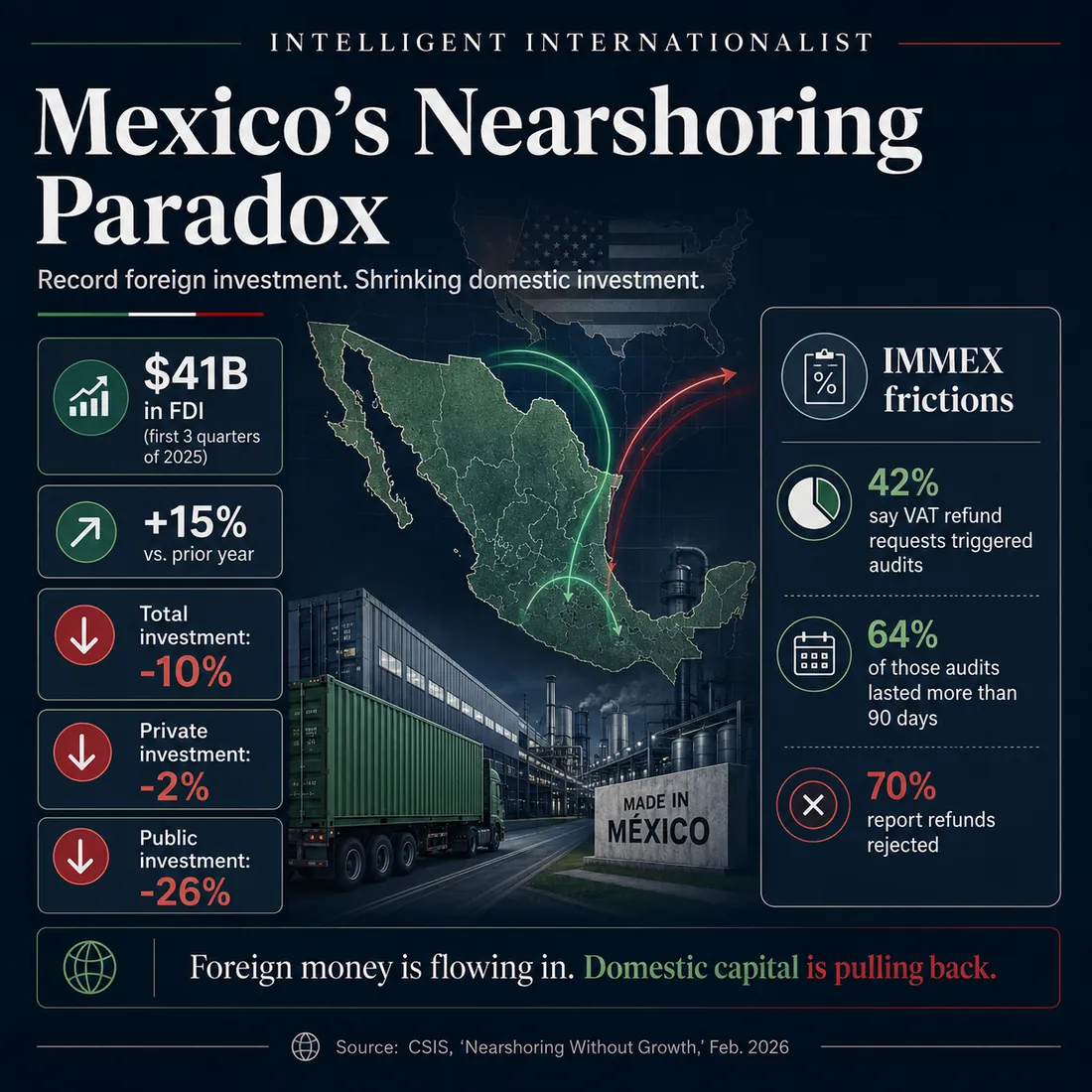
Mexico’s national home prices rose nearly 9 percent over the past year. Fitch Ratings projects 7 to 9 percent nominal growth for 2026. Specific neighborhoods in Mexico City, Guadalajara, and Monterrey are running at 10 to 12 percent annually. Nearshoring is doubling industrial starts, and the residential read-through is real.
Panama City rents have climbed steadily for over a year and supply has not kept pace. Studios in prime zones touch 9 percent gross yields. Punta del Este in Uruguay is tracking 8 to 12 percent annual appreciation, with capital gains taxed at a flat 12 percent on the inflation-adjusted gain — one of the cleaner and more predictable exit regimes in the region.
Colombia’s national median is only $1,180 per square meter. Gross yields run 7 to 9 percent nationally, with pockets in Medellin and Cartagena reaching 8 to 12 percent in dollar terms. The value proposition looks extraordinary on a spreadsheet.
The numbers are real. The appreciation is happening. And yet, if you ask the foreign owners who have actually tried to sell, a very different picture emerges. The spreadsheet ends where the notary’s office begins.
The Spreadsheet vs. the Closing Table
Here is a fact that almost no market report includes. By widely cited industry estimates, less than 20 percent of adults in Latin America have access to traditional mortgage loans. In developed economies, that number is over 70 percent.
This is not a footnote. It defines the buyer pool.
When you sell a property in the United States, you are selling into a market where the majority of potential buyers can finance the purchase with a 30-year fixed mortgage at competitive rates. The average home sells in about 52 days nationally. The MLS system provides price transparency. The title insurance industry makes closing predictable. Wire transfers take hours.
When you sell a property in Colombia or Brazil or Mexico, you are selling into a market where most buyers need cash. The pool of people who can write a check for your property is a fraction of the pool that wants to live in it. That structural constraint is invisible when you are buying. It becomes the dominant variable when you are trying to exit.
“Mexico’s realty markets are not as mature as property markets in the USA or UK. Transaction volumes are lower. Some properties can remain on the market for years.” — Mexperience, 2026
What Selling Actually Looks Like, Country by Country
Mexico. The average days-on-market for a standard residential resale is 85 to 120 days nationally, but that number masks an enormous spread. A well-priced apartment in Roma Norte or Condesa can sell in 45 to 75 days. An overpriced luxury house or a weak-title property can sit for 120 to 210 days. Most homes close 4 to 8 percent below the first serious asking price. Agent commissions run 5 to 8 percent. If the property is within the restricted zone (50 kilometers from the coast or 100 kilometers from a border), the fideicomiso structure adds annual bank trustee fees for as long as you hold. Capital gains tax is calculated on the profit, not the gross sale. And the notary does not represent you. They represent the transaction.
Colombia. Foreign sellers need a NIT (tax identification number) from the DIAN. A Special Power of Attorney must be executed at a Colombian consulate or apostilled if signed abroad. The Certificado de Tradición y Libertad, the property’s legal identity document, must be less than 30 days old at closing. Capital gains tax is a flat 15 percent on net profit for assets held more than two years, but you can only deduct documented improvements if you kept the official tax invoices. Without them, DIAN may tax the entire sale proceeds. Agent commissions run 3 to 5 percent generally. The notary fees and departmental taxes add roughly another 1.3 percent. And to repatriate your sale proceeds, you must present the original wire-in documentation proving the funds were legitimate foreign investment. If you did not register Formulario 4 at the time of purchase, the exit is blocked.
Brazil. Capital gains tax ranges from 15 to 22.5 percent depending on the profit (15 percent flat for non-residents). Agent commissions run 6 to 8 percent nationally. A CPF (tax ID) is required. If you are selling from abroad, you need a power of attorney to sign the escritura. Repatriating funds requires proof that all taxes are settled, the original deed, and the sale contract. The Brazilian real has depreciated significantly against the dollar over the past decade, which means a property that appreciated in local currency may have gone nowhere or even lost value in dollar terms. The bank will convert your reais at the prevailing rate. You do not get to choose the day.
Argentina. The first sustained USD recovery in a decade is the good news. The bad news is that Argentina has no functioning mortgage market to speak of. The buyer pool is overwhelmingly cash. The informal exchange rate premium has collapsed to 2 to 3 percent above official, which means the peso arbitrage window that once attracted speculators is closed. The market is finally functioning on fundamentals, which is healthy, but fundamentals also mean you need a genuine end-user buyer, not a currency speculator. That takes longer.
The Three Variables Nobody Models
Investors in emerging market property tend to model three things: purchase price, projected appreciation, and rental yield. Those are the spreadsheet variables. But the exit depends on three variables the spreadsheet cannot capture.
One: the buyer pool. In markets where mortgage access is below 20 percent, every seller is competing for the same thin slice of cash buyers. When you need to sell, you are not competing against other properties. You are competing against the buyer’s alternative use of cash, which could be a different country, a different asset class, or simply waiting.
Two: the bureaucratic friction. Every Latin American market adds layers between you and a closed sale that developed markets do not. The power of attorney. The apostille. The tax clearance certificate. The notary who does not represent you. The wire documentation you were supposed to keep from day one. None of these are deal-breakers in isolation. Together, they add months and introduce failure points that do not exist in a US or UK closing.
Three: the currency conversion. Even if your property appreciated 8 percent in local currency terms, your actual dollar return depends on the exchange rate on the day you sell. In Brazil, the real has been a structural headwind for dollar investors. In Colombia, the peso has weakened steadily. In Mexico, the peso strengthened through 2024 before softening. The currency variable can turn a 10 percent local-currency gain into a 3 percent dollar gain, or a loss, depending entirely on timing. And you do not control the timing when you are the seller who needs to close.
Where Liquidity Actually Exists
If you want to invest in Latin American real estate and actually be able to sell it, the data points to a few structural truths.
Urban beats rural. A property in Mexico City, Bogota, or Sao Paulo has a genuine buyer pool. A property in a small coastal town or inland village may sit for a year or more. Transaction volumes concentrate in large cities and established expat corridors. The further you go from those, the thinner the buyer pool becomes.
Walkable beats remote. The fastest-selling properties in every Latin American market are apartments in walkable, amenity-rich neighborhoods. Roma Norte and Condesa in Mexico City. El Poblado and Laureles in Medellin. Providencia in Guadalajara. These are not the highest-yielding properties. They are the most liquid. And in emerging markets, liquidity is worth more than an extra point of yield.
Titled beats informal. The single biggest friction in Latin American property transactions is title quality. A property with a clean, registered, 20-year chain of title sells faster than one with gaps, informal transfers, or unresolved succession issues. This sounds obvious, but an enormous share of Latin American property has some degree of title irregularity. Buyers who do proper due diligence avoid those properties. Sellers who did not do proper due diligence when they bought discover the problem when they try to sell.
The Uruguay exception. Uruguay’s 93 to 95 percent sale-to-asking price ratio is a regional outlier. It signals a liquid, confident market where buyers and sellers price close to each other. Montevideo yields are modest at 5 percent, and median home prices around $290,000 grow at a steady 4 to 6 percent annually in dollar terms. Those are not the headline numbers that attract speculative capital. They are exactly the numbers that make an exit feasible.
How to Actually Research an Exit Before You Enter
The smartest thing a buyer can do is research the sale before they research the purchase. Here is what that looks like in practice.
Ask for days-on-market data for comparable properties in the neighborhood you are targeting. Not the city average. The neighborhood. If the data does not exist, that is itself information. Markets with no days-on-market data are markets with no transparency, and markets with no transparency are markets where you sell at a discount.
Get a title study before you make an offer. A 20-year estudio de titulos costs a few hundred dollars in most Latin American countries. It tells you whether the property you are about to buy will be sellable when you want to exit. Skipping this step to save a few hundred dollars is how people end up owning property they cannot sell for years.
Understand the repatriation requirements before you wire money. In Colombia, you must register every incoming wire transfer with the central bank at the time it is made. Do not try to backfill Formulario 4 registrations after the fact. In Brazil, you need to demonstrate all taxes are settled before you can move proceeds out. In Mexico, the notary handles the tax withholding, but you need to understand what is being withheld and why. Ask the question before you send the wire. Do not discover the answer when you try to bring the money home.
Price the full exit, not just the purchase. Agent commissions, capital gains tax, notary fees (0.3 to 0.6 percent), departmental taxes, currency conversion costs, and legal representation add up. In Mexico, the combined seller-side costs typically run 8 to 12 percent of the sale price. In Colombia, 5 to 7 percent plus 15 percent on the gain. In Brazil, 8 to 10 percent plus 15 to 22.5 percent on the gain. If your property appreciated 15 percent in local currency and the peso depreciated 8 percent against the dollar, your net dollar return after exit costs may be close to zero. That is not a reason to avoid Latin American property. It is a reason to model the full exit before you buy in.
The Bottom Line
Latin American real estate is not a scam. The appreciation is real. The yields are real. The structural growth drivers (urbanization, a rising middle class, nearshoring, infrastructure investment) are real. For the right buyer, in the right market, with the right time horizon, the returns can be exceptional.
But the difference between a good investment and a trapped one is liquidity. And liquidity in emerging market property is not just about what your property is worth. It is about who can buy it, how long it takes to close, what the bureaucracy demands, and whether you can get your money out when the deal is done.
The investors who win in these markets are the ones who research the exit before they make the entry. Everyone else is holding an appreciated asset they cannot sell.
This is strategy, not advice. Real estate involves risk, and emerging market real estate involves additional risks related to currency, title, and regulatory change. Consult qualified local professionals before making material investment decisions.
— Intelligent Internationalist